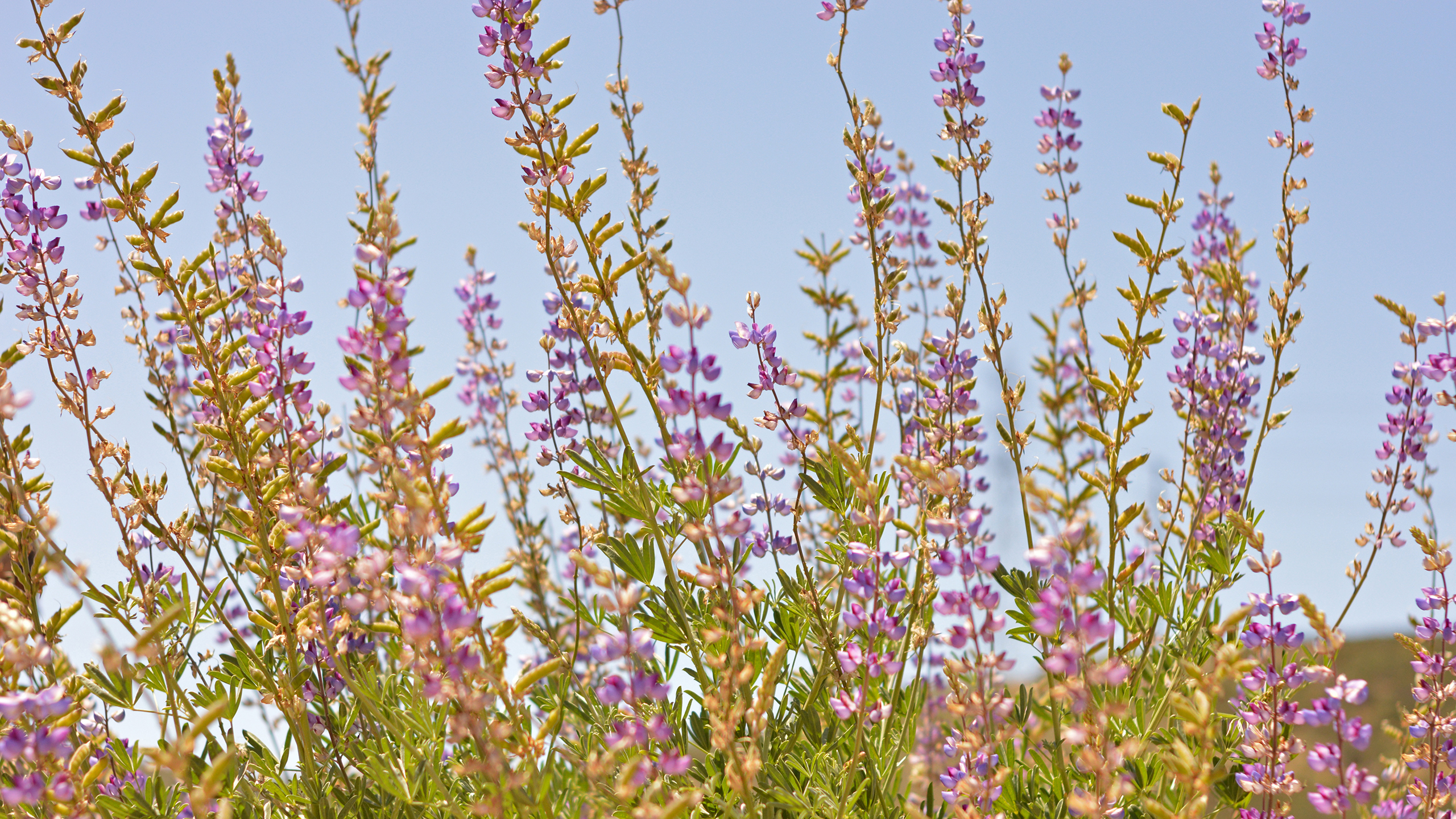
This paper describes efforts of the City of San Diego, in conjunction with the nonprofit Friends of Los Peñasquitos Canyon, to protect a population of the federal and state endangered willowy monardella (Monardella linoides) from changes in urban hydrology.
1. “Willowy Mint Habitat, a Dynamic Hydrogeomorphic System, Threats and Preservation” presented by Lee Gordan and Vince Scheidt, San Diego chapter of California Native Plant Society
2. Discussion: willowy monardella management strategy and opportunities
3. Next steps in implementing willowy monardella management actions
Recording from the September 28, 2022 SDMMP Management and Monitoring Coordination Meeting. Presentations from Ann Baldridge, Ashleyann Bacay, and Carolina Guia (RCD of Greater San Diego):Regional Priority Plan; Diana Brand Ramirez and Ian Maunsell (AECOM): Assessment of Willowy Monardella Status, Habitat, and Threats on Conserved Lands in San Diego County, and Emily Perkins (SDMMP) Preserve Metrics Dashboard..
This report presents the results of the 2012 census and monitoring surveys for the federally endangered willowy monardella (Monardella viminea) at Marine Corps Air Station (MCAS) Miramar.
This report presents the results of the 2009 census for the federally endangered and
state of California endangered willowy monardella (Monardella viminea) throughout the
Marine Corps Air Station (MCAS) Miramar (Station).
The purpose of the census is to provide fundamental information on the current
condition of the willowy monardella population across the station as a whole. Such
information is used in the continued management of willowy monardella on the
Station, and to support MCAS Miramar’s stewardship commitments regarding the
species population health as well as its management. Through these surveys, the
Station’s willowy monardella population was evaluated using an established plant
estimation and health assessment protocol, as requested by the Environmental
Management Department at MCAS Miramar. The protocol was developed, in part, as a
standard approach for approximating individual plants. Given the species’ clumpy
appearance and lack of a central stem, it is difficult, if not impossible without creating
disturbance and possible damage, for independent observers to differentiate each
individual plant consistently.
This report details the 2005 monitoring survey for the endangered willowy monardella
(Monardella linoides spp. viminea, now Monardella viminea) on the eastern portion of Marine
Corps Air Station (MCAS) Miramar. The purpose of the survey was to provide essential
information for the continuing management of this federally endangered species, and to support
MCAS Miramar’s stewardship commitments regarding population census, health, and
management decisions.
This survey assessed the willowy monardella population using an established monitoring protocol
provided by the Environmental Management Department at MCAS Miramar. This protocol had
been developed and employed during 2003 and 2004, thus making comparisons over time
possible. Averaging over all 15 survey plots, there has been a 75% decline in the numbers of
willowy monardella individuals from 2003 to 2005. This decline in numbers continues the losses
already evident in 2004 when sampling took place after the Cedar Fire. The Cedar Fire had
affected all willowy monardella plots in the project footprint. Documentation of the reduced
numbers is presented. Some hypotheses are presented to explain the loss, include the negative,
combined impacts of drought, fire, and severe flooding, all exacerbated by competition from
invasive annual grasses and herbs.
This report presents the results of the 2009 census for the federally endangered and
state of California endangered willowy monardella (Monardella viminea) throughout the
Marine Corps Air Station (MCAS) Miramar (Station).
The purpose of the census is to provide fundamental information on the current
condition of the willowy monardella population across the station as a whole. Such
information is used in the continued management of willowy monardella on the
Station, and to support MCAS Miramar’s stewardship commitments regarding the
species population health as well as its management. Through these surveys, the
Station’s willowy monardella population was evaluated using an established plant
estimation and health assessment protocol, as requested by the Environmental
Management Department at MCAS Miramar. The protocol was developed, in part, as a
standard approach for approximating individual plants. Given the species’ clumpy
appearance and lack of a central stem, it is difficult, if not impossible without creating
disturbance and possible damage, for independent observers to differentiate each
individual plant consistently.
The primary objective of this effort was to identify the current population of willowy
monardella at the Station, to recognize patterns of occurrence, and develop a better
understanding of the species’ life history to support management efforts. The 2009
census showed that recorded individuals at the Station decreased by approximately 45
percent since the baseline assessment which estimated the population size in 2002.
Various explanations for this trend are considered in this report. Possible habitat
reasons for this phenomenon include negative effects of drought, fire, and severe
flooding, intensified by competition from exotic annual grasses and herbs. While no
one of these reasons seems to be the total cause, the combined effects of multiple
stresses may be the cause of this decline. However, given the differences in population
measurement between survey efforts, recent results are likely somewhat inconclusive
in terms of the species’ overall condition.
While the majority of plants observed during this survey were in good health, it was
apparent that some plants that had been previously recorded were no longer present.
Temporary fluctuations in population may be a natural occurrence for this species;
however, this concept has yet to be documented. Given the limited information on this
species, it is clear that further research would be valuable in understanding the
natural history of willowy monardella. This report presents recent findings on the
Station’s willowy monardella population and identifies potential management
implications. Federal and state laws concerning the treatment of endangered species
were followed at all times during the course of this survey effort.
Willowy monardella (Monardella viminea) is a federally endangered plant species found along
stream courses in three relatively protected west facing canyons of the Marine Corps Air Station
Miramar (Station). The goal of this project is to test the effect of various controls on exotic
species, especially exotic grasses, on the vigor and recruitment of willowy monardella. This
report describes the site conditions at five sites in West Sycamore, Spring, and San Clemente
Canyons, and reports on willowy monardella status at the treatment sites in June 2010 following
two years of treatment activity. It defines monitoring activities during 2010 of the four sites
established previously, as well as conditions at one additional site, which was set up in 2010
with treatment and control blocks identical to those at the other four sites.
Vernadero Group Inc. (Vernadero) was contracted by Naval Facilities Engineering Systems Command Southwest on behalf of Marine Corps Air Station (MCAS) Miramar to conduct a Stationwide census for willowy monardella (Monardella viminea) and monitor the species within long-term monitoring plots at MCAS Miramar in San Diego, California. We conducted willowy monardella surveys in 2020 following all of the census and monitoring methods described by the 2013 Willowy Monardella (Monardella viminea) Field Protocol Manual to ensure consistency with past and future willowy monardella surveys at MCAS Miramar. We surveyed and mapped all willowy monardella on MCAS Miramar, identifying adults, mature plants, juveniles, and seedlings. We used a standardized method to define and delineate clumps of willowy monardella during the census. We visited established monitoring plots and used standardized methods for measuring willowy monardella growth rates, determining clump health, and evaluating willowy monardella population expansion or contraction. We conducted census and monitoring activities at MCAS Miramar from 25 June 2020 through 29 July 2020.
This report summarizes the results of the 2015 monitoring surveys for the federally endangered
willowy monardella (Monardella viminea) conducted on Marine Corps Air Station Miramar by
AECOM biologists in July 2015. Monitoring was completed at 11 monitoring plots previously
established by the San Diego Natural History Museum. Additionally, six new monitoring plots
were established by installing boundary stakes in the field and establishing photograph points.
Each willowy monardella clump within the monitoring plots was mapped and measured.
Vernadero Group Inc. (Vernadero) was contracted by Naval Facilities Engineering Command Southwest on behalf of Marine Corps Air Station (MCAS) Miramar to conduct a Stationwide census for willowy monardella (Monardella viminea) and monitor the species within long-term monitoring plots at MCAS Miramar in San Diego, California. We conducted willowy monardella surveys in 2017 following all of the census and monitoring methods described by the 2013 Willowy Monardella (Monardella viminea) Field Protocol Manual to ensure consistency with past and future willowy monardella surveys at MCAS Miramar. We surveyed and mapped all willowy monardella on MCAS Miramar, identifying adults, mature plants, juveniles, and seedlings. We used a standardized method to define and delineate clumps of willowy monardella during the census. We visited established monitoring plots and used standardized methods for measuring willowy monardella growth rates, determining clump health, and evaluating willowy monardella population expansion or contraction. We conducted census and monitoring activities at MCAS Miramar from 22 June 2017 through 8 August 2017.
In 2002, Marine Corps Air Station (MCAS) Miramar constructed a new rifle range
in San Clemente Canyon along a tributary of the ephemeral drainage that runs
through the canyon. One of the conditions for approval of the Rifle Range was
that the Federally
listed Endangered Species, willowy monardella (Monardella viminea), be
monitored for one mile downstream of the rifle range construction. The
monitoring was to determine if the altered hydrology from the rifle range
construction had any measurable negative impacts to the listed species.
The rifle range was built to minimize impacts to the tributary ephemeral drainage
of the San Clemente Canyon drainage. During construction the majority of the
ephemeral drainage was left intact, however there were places where berms and
fences had to cross the drainage and in these spots drainage was culverted.
The San Diego Natural History Museum was at the time working on developing a
long term willowy monardella monitoring program for MCAS Miramar and was
asked to provide monitoring for the requirements of the rifle range that would be
compatible with the overall monitoring effort.
The dual purpose of this study is:
• To see if construction of the rifle range had any negative impacts to the
occurrences of willowy monardella downstream
• To supplement the data for monitoring willowy monardella on the station
as a whole.
The project followed the same counting methodology as was used in the larger
overall willowy monardella monitoring effort, so demographic data between the
two studies is comparable. There are three recent studies of willowy monardella
at MCAS Miramar in addition to this one. The largest most comprehensive study
is (Long-Term Monitoring Plan and Baseline Survey of Willowy Monardella at
MCAS Miramar, San Diego, CA, Rebman and Dossey, 2006). Two smaller
related studies are (Willowy Monardella Monitoring Survey 2005, Tierra Data
Inc., 2005 and 2006 Willowy Monardella Census and Long-term Monitoring
Program Status Review, Dossey and Rebman, 2006). A generalized discussion
of how this study relates to those studies and a comparison of conclusions is
provided at the end of this document.
The San Diego Natural History Museum signed a Cooperative Letter of Agreement with
Marine Corps Air Station (MCAS) Miramar through Southwest Division Naval Facilities
Engineering Command to provide a long-term monitoring plan and baseline survey for
the endangered species willowy monardella (Monardella viminea). This project provides
a comprehensive population census in all appropriate Station habitat, creates a method to
track the status of willowy mondardella on MCAS Miramar, develops a methodology for
monitoring population trends, and reports potential plant specific management needs.
The monitoring protocols outlined here will provide consistent data collection, data
evaluation, and assessment of this taxon’ s status on the Station.
In March 2020 as part of the MSP Roadmap objectives, the Conservation Biology Institute and
AECOM in collaboration with SDMMP, prepared a Framework Rare Plant Management Plan for
Conserved Lands in Western San Diego County (FRPMP) for SANDAG. The FRPMP provides
guidelines to manage MSP-rare plants on conserved lands in western San Diego County by
determining key factors for management, recommending management strategies and priority
actions, and identifying research needs. The March 2020 FRMP included species-specific
chapters for four MSP rare plants; an update to the FRMP completed March 2021 added new
species-specific chapters for three additional MSP rare plants, including willowy monardella.
Vernadero Group Inc. was contracted by Naval Facilities Engineering Systems Command Southwest on behalf of Marine Corps Air Station (MCAS) Miramar to conduct a Stationwide census for willowy monardella (Monardella viminea) and to monitor the species within long-term monitoring plots at MCAS Miramar in San Diego, California. We conducted willowy monardella surveys in 2023 following all census and monitoring methods described by the 2013 Willowy Monardella (Monardella viminea) Field Protocol Manual to ensure consistency with past and future willowy monardella surveys at MCAS Miramar. We surveyed and mapped all willowy monardella on MCAS Miramar, identifying adults, mature plants, juveniles, and seedlings. We used a standardized method to define and delineate clumps of willowy monardella during the census. We visited established monitoring plots and used standardized methods for measuring willowy monardella growth rates, determining clump health, and evaluating willowy monardella population expansion or contraction. We conducted census and monitoring activities at MCAS Miramar from 30 June 2023 through 12 August 2023.
This is a species management document for Willowy Monardella. This document contains recommendations in an effort to establish guidelines for the conservation on willowy monardella, a federally listed endangered plant. The recommendations is applicable to all areas of Marine Corps Air Station Miramar.
Vernadero Group Inc. (Vernadero) was contracted by Naval Facilities Engineering Command Southwest on behalf of Marine Corps Air Station (MCAS) Miramar to conduct a Stationwide census for willowy monardella (Monardella viminea) and monitor the species within long-term monitoring plots at MCAS Miramar in San Diego, California. We surveyed and mapped all willowy monardella on MCAS Miramar, identifying adults, mature plants, juveniles, and seedlings. A total of 972 willowy monardella clumps was found during the 2017 census; 278 clumps that had been observed and tagged during previous surveys were not found again during the 2017 census. Clumps were found in six of the nine canyons surveyed and a total of 141 living willowy monardella clumps was recorded in the 17 monitoring plots. The results from the 2017 census and plot monitoring indicate a continuing decline in the number and health of willowy monardella clumps at MCAS Miramar. The cause of the decline in willowy monardella clumps and reproduction is unknown; however, stress to plants from the long-term drought conditions that occurred for the five years prior to the 2017 surveys accompanied by large scouring events in the stream channels from large rainfall events in the 2016 and 2017 growing seasons could have caused mortality in adult willowy monardella plants, reduced the production of viable seeds during drought conditions, and displaced all viable seed produced when drought conditions were relieved by above-average precipitation in 2016 and 2017.
This review was compiled by staff of the Carlsbad Fish and Wildlife Office (CFWO), U. S. Fish and Wildlife Service (Service). The review was completed using documents from office files as well as available literature on Monardella linoides subsp. viminea. We relied on our 1998 listing rule, our proposed critical habitat designation, our final critical habitat designation, and reports and information in our files, sent to us during the public response period. The subspecies? status and threats at the time of listing are compared to current status and threats.
A notice announcing initiation of the 5-year review for this subspecies and the opening of a 60-day period requesting information from the public was published in the Federal Register on March 22, 2006 (71 FR 14538). During the 60-day period we received information from two respondents but neither provided new information relevant to this review.
Based upon Station documentation in the Monardella linoides ssp.
viminea files dated from 1981 to 2000 (both hardcopy and GIS
format), this is a compilation of the available information
regarding specific surveys for this endangered plant. Some site
data refers to the Mondardella populations as having clusters or
clumps rather than individuals. On the report sheets (particularly
those for 1995), the individuals reported were the same number as
the clusters discussed. Therefore, it will be assumed that cluster
or clump are equivalent to individual for this survey summary. No
formal survey reports for willowy monardella were found for 1980 –
2000. No original data sheets were found in Navy files, only
transcribed write-ups from surveyor efforts for this time period.
This project is aimed at assessing the status and genetic diversity of populations of six species of
rare plants in San Diego County including Acanthomintha ilicifolia (San Diego thornmint) and
Monardella viminea (willowy monardella) in the Lamiaceae, Chloropyron
maritimum ssp. maritimum (salt marsh bird's-beak) and Dicranostegia orcuttiana (Orcutt's
bird's-beak) in the Orobanchaceae, and Baccharis vanessae (Encinitas baccharis) and Deinandra
conjugens (Otay tarplant) in the Asteraceae. The results of this project should directly contribute
to the conservation and management of these rare plant taxa in the San Diego MSPA. For each of
these species, information on the genetic makeup and diversity across its range is needed to
inform potential management actions such as establishing new populations and enhancing
existing populations. Previously, verification and scientific voucher specimens were lacking
from many occurrences of these six target species across San Diego County. Therefore, the goals
of this task are to collect genetic material from as many species’ occurrences as possible and to
collect voucher specimens to serve as a long-term resource for studying the populations
associated with this project. These collections are useful for future genetic and morphological
work to help inform management action. The genetic analyses of these collections will be
performed by USGS.
Objectives of this Study: The goal of this project was to evaluate the current status of the rare plant populations on MSCP preserve lands administered by the City of San Diego, including population size, density, and habitat quality. Our three primary objectives were:
1. Review existing population status and location information to update the City's database and to identify City-owned lands that have the potential to support populations of MSCP covered plant species.
2. Conduct reconnaissance surveys on MSCP lands to determine if additional populations and locations of covered plants exist and to refine the locations where quantitative monitoring should be conducted.
3. Initiate quantitative monitoring for selected species and populations or locations that have not been monitored previously. This monitoring will establish the baseline data that will be used in conjunction with future monitoring to determine the status of these species and populations. This information will then be used to direct the management of these species' populations and habitats within the City's MSCP lands. The specific questions to be addressed in the long-term monitoring program are:
a. What are the status and trends of the target species?
b. What are the site conditions that may influence spatial patterns in the
population dynamics of the target species?
c. What management actions should be taken to minimize threats to the
target species, and are these actions effective?
The City of San Diego has conducted quantitative monitoring for short-leaved Dudleya (Dudleya blochmaniae ssp. brevifolia), San Diego Ambrosia (Ambrosia pumilla), and Nuttall's Lotus (Lotus nuttallianus). In addition, City staff and volunteers have monitored selected populations of willowy Monardella (Monardella linoides ssp. viminea) and San Diego thornmint (Acanthomintha ilicifolia). Table 1 lists the species that were monitored as part of this study (X) and those species for which the City of San Diego (SD) conducted quantitative monitoring. Although some of the species were not monitored as part of this study, all 11 species listed in Table 1 were included in the literature review and reconnaissance surveys discussed in Section 2.
We, the U.S. Fish and Wildlife Service (Service), recognize the recent change to the taxonomy of the currently endangered plant taxon, Monardella linoides ssp. viminea, in which the subspecies was split into two distinct full species, Monardella viminea (willowy monardella) and Monardella stoneana (Jennifer's monardella). Because the original subspecies, Monardella linoides ssp. viminea, was listed as endangered under the Endangered Species Act of 1973, as amended (Act), we reviewed and updated the threats analysis that we completed for the taxon in 1998, when it was listed as a subspecies. We also reviewed the status of the new species, Monardella stoneana. We retain the listing status of Monardella viminea as endangered, and we remove protections afforded by the Act from those individuals now recognized as the separate species, Monardella stoneana, because the new species does not meet the definition of endangered or threatened under the Act. We also revise designated critical habitat for Monardella viminea. In total, approximately 122 acres (50 hectares) in San Diego County, California, fall within the boundaries of the critical habitat designation. We are not designating critical habitat for Monardella stoneana because this species does not warrant listing under the Act.
The Conservation Biology Institute (CBI) and AECOM Technical Services, Inc. (AECOM) worked
with the San Diego Management and Monitoring Program (SDMMP) and other regional partners to
prepare a Management Strategic Plan (MSP) Seed Collection, Banking, and Bulking Plan (SCBBP)
for MSP rare plants in the Management Strategic Planning Area in San Diego County, California.
The Rare Plant Management Group Steering Committee guided development of the plan, while
species Working Groups provided technical expertise (Appendix A). The plan was funded by the
San Diego Association of Governments (SANDAG). The SCBBP is a living document that will be
updated over time.
The SCBBP provides a strategic approach to managing seed resources for MSP rare plants on
conserved lands in western San Diego County. This document does not replace existing NCCP
obligations or requirements, and recommendations in the plan are advisory and meant to be
implemented voluntarily if land owners and managers so desire. Recommendations are
consistent with the intent of regional NCCP plans. The SCBBP fulfills an objective in the
regional Management and Monitoring Strategic Plan for Conserved Lands in Western San Diego
County: A Strategic Habitat Conservation Roadmap (MSP Roadmap), provides guidelines to
implement selected management actions in the MSP Framework Rare Plant Management Plan
(F-RPMP) related to seed resources, and is informed by regional and preserve-specific
monitoring data and studies.
The goal of this study was to elucidate relationships among the geographically proximate members of the M. linoides and M. odoratissima groups using population genetics methods, namely M. linoides [subsps. Linoides, oblonga (E. Greene) Abrams, and stricta (Parish) Epling], M. viminea, M. stoneana, and M. australis Abrams (of the M. odoratissima group) (but see Elvin and Sanders in press). Fluorescent ISSRs were employed because they require no up front information (unlike microsatellites) and provide a larger number of fragments than non-fluorescent methods. The specific goal was to test the hypotheses that M. viminea is distinct from M. stoneana, that M. viminea is distinct from M. linoides, and that M. stoneana and M. viminea are more closely related to M. australis than to M. linoides.